Why Your Water Heater May Not Producing Enough Hot Water
A hot shower on a cold day feels great, but turning on the shower to find only cold water does not feel great. That lack of hot water means something is wrong with the water heater. The good news is that some of the potential causes are simple to fix. However, others aren’t, and they require the immediate attention of a plumber.
Thermostat Issues
It’s totally possible that the thermostat isn’t set to the correct temperature. Maybe someone turned it down temporarily and forgot to turn it back up. Maybe you bumped into it when walking past the heater in the garage. In that case, all you have to do is set the thermostat to the correct temperature.
Note that you don’t want to set the temperature to anything higher than 140 degrees Fahrenheit. In fact, the recommended temperature is at 120F. Temperatures over 140F can scald skin and be especially dangerous for children.
120F is considered safe for most people, although if you have a suppressed immune system or other conditions that make you prone to infections, you may want to keep the thermostat set toward 140F. That’s because 120F is just below the threshold for killing off Legionella bacteria.
It’s also possible that your thermostat is broken. If you reset it, and the water doesn’t warm up or is already set to a good temperature, then you’re dealing with either a broken thermostat or a problem somewhere else in the water heater.
Too Much Demand on the Hot-Water Supply
One such problem is too much demand on the hot-water supply. For example, you’re taking a shower, a family member just started the washing machine using hot water and another person just started the dishwasher. When all that use happens at the same time, the heater can’t keep up.
Too much demand and not enough supply will lead to reduced warm water flowing to the shower and the appliances. This is easy to test, though; find a time when no one else is using hot water, and turn on the showerhead or other fixture where you previously had the problem. If the water temperature seems fine, then you know it’s a demand issue. Either work out a schedule regarding hot-water use, or take a look at the heater size.
Inadequate Tank Size
Tanks that are too small for the house can have trouble heating up enough water. Tankless heaters may just not be able to produce enough in general to meet typical demand in your house.
For tank heaters, you’ll have to look at getting a bigger tank. For tankless systems, take a look at installing additional tankless heaters for appliances that use a lot of hot water. For example, you can install a tankless heater that’s connected only to the dishwasher. That allows you to run the dishwasher even when other people are trying to take hot showers because the dishwasher’s supply of hot water is separate.
Circulation Problems in Tank Heaters
Another reason why a tank-style heater might not be heating up enough water is because the water in the tank has to circulate properly to ensure even heating. Water coming into the tank is cold. It usually enters the tank via a dip tube that carries the water to the bottom of the tank, where the burner or element is. As more cold water comes out of the dip tube, warm water rises to the top of the tank.
If the dip tube breaks, cold water can mix with the heated water, pulling its temperature back down. The result is that you get lukewarm or cool water from your faucet.
Tankless Heaters and Low-Flow Fixtures
An unexpected (and admittedly bizarre) problem in tankless heaters is that low-flow fixtures, like low-flow showerheads, can be so low-flow that the heating element simply doesn’t turn on. Sometimes it’s a solenoid refusing to allow fuel through. If you’ve noticed that your hot water problems seem to focus on showerheads that have low gallon-per-minute flow rates, that could be the cause.
Try replacing the showerhead with one that’s got a higher flow rate and see if that helps. If the hot water seems adequate, you’ve likely found the cause.
Broken Heating Systems
Your heater might have a broken burner or element. Or, something connected to the heating element is broken. That’s something that you’ll need to call a plumbing company about; don’t try to open up the heater yourself.
However, if your heater is electric and has two elements, you can get a general sense of which heating element might be broken. If the bottom element is broken, the water will be hot for a short time and then run cold. If the top element is broken, the water will be barely warm but not truly cold the entire time you have the faucet or shower on.
If your water heater is gas, and you smell that sickly odor, that indicates there’s a gas leak or that the gas valve is broken. Call your local utility immediately to have them turn off the gas. Then, contact a plumber about replacing the heater.
Settled Sediment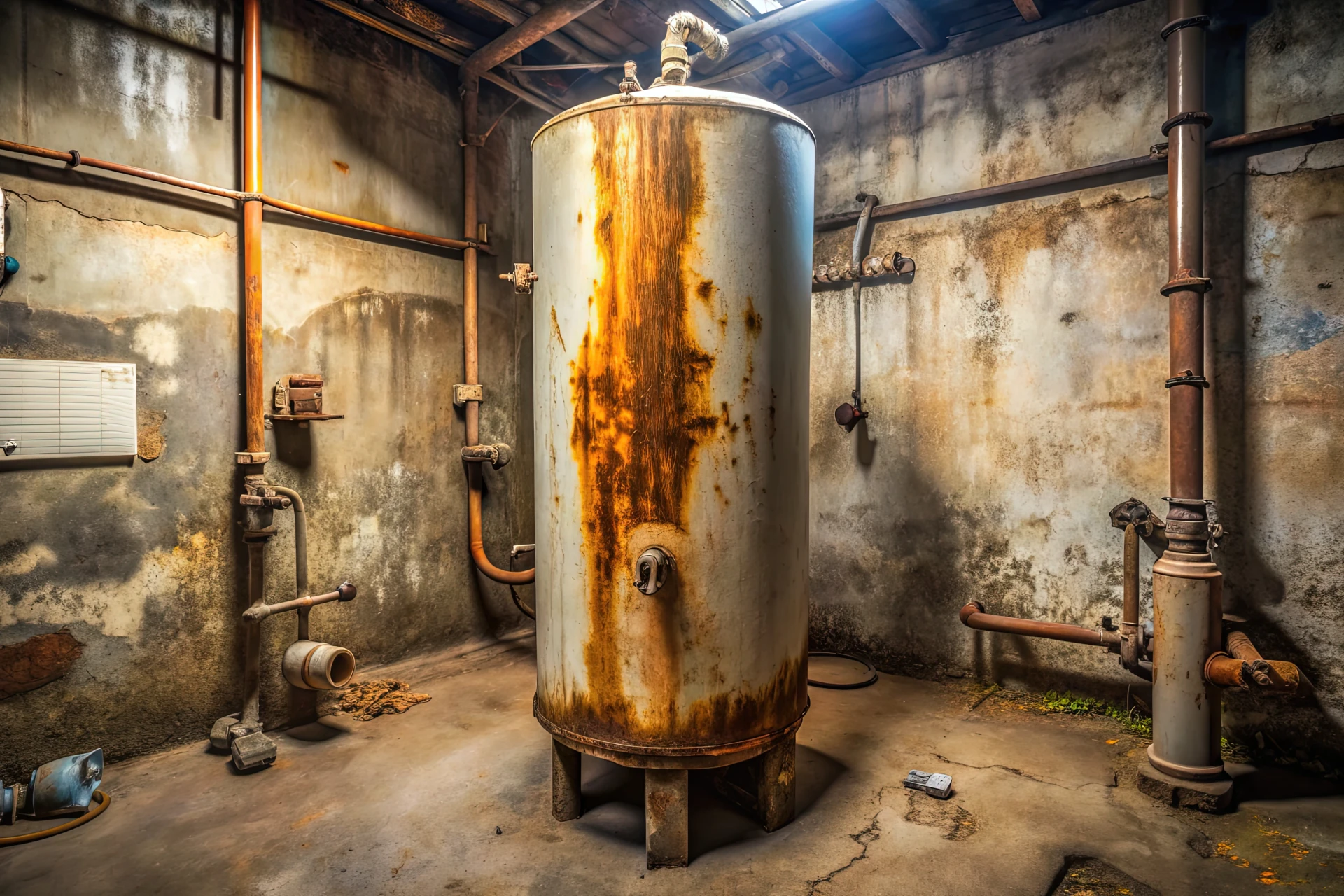
Over time, minerals and small debris in the water settle on surfaces. If you have hard water, you’ll be familiar with the mineral buildup on fixtures, on dishracks and inside pipes. That same buildup can cover the bottom element or burner in a tank. The layer of sediment acts like an insulator, blocking heat from transferring to the water in the tank. The end result is lukewarm or even cold water.
Removing the sediment by draining the tank solves this problem. It’s actually possible to drain the tank yourself, but if you’re not familiar with the procedure, have a plumber do it. You can have a plumber return every year to drain the tank as part of a maintenance routine.
The Tank or a Connection Is Leaking
Finally, the most distressing cause (other than a gas valve leak) of a lack of heated water is that the tank is leaking, or a connection is leaking. That’s a very bad sign and needs immediate attention. If you let the leak get worse, you risk having the contents of the tank spill out all over the floor. That’s a mess and requires not only a new tank, but also water damage remediation.
If Your Water Heater Has You Baffled, Call Us for Help
It’s not uncommon to have at least one issue with your water heater that’s simple to fix. But if the problem keeps occurring, then you need to call Benjamin Franklin Plumbing. We’ll check out every part of the appliance until we find the cause. A working water heater is a necessity for health, safety and comfort, so don’t ignore a sudden drop in the amount of hot water. Contact us immediately for assistance!